Established in 2002, the Research and Development Foundation (RDF) began as a volunteer-driven initiative committed to supporting underprivileged communities in Sindh, Pakistan—particularly women, youth, children, and minorities—to realize their full potential. From early grassroots efforts in Hyderabad, RDF evolved through structured strategic planning (initiated in 2008) into a full-fledged development organization managing diverse thematic programs across the region.
Empowering communities to create an equitable, eco-friendly, and resilient world, fostering sustainable development for future generations.
To build inclusive social institutions and deliver innovative solutions that promote education, technical and vocational training, climate-resilient sustainable development, and equitable access to resources and opportunities for marginalized communities.
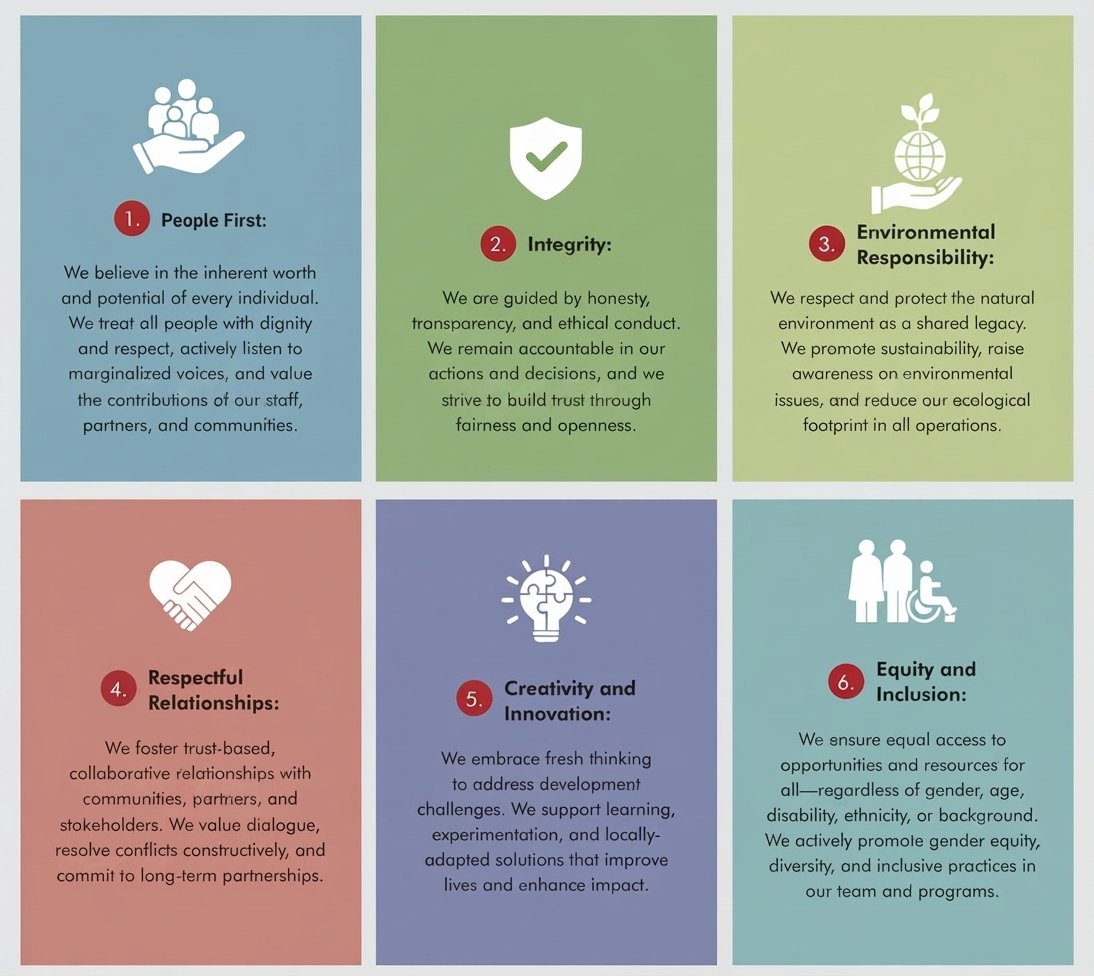
The value system of the Research and Development Foundation (RDF) is rooted in a deep commitment to dignity, equity, and sustainability. RDF puts people first, upholding integrity, transparency, and ethical conduct in all its actions. It promotes environmental responsibility by minimizing its ecological footprint and fostering sustainability. The organization values respectful, trust-based relationships with communities and partners, while encouraging creativity and innovation to solve development challenges. At its core, RDF is dedicated to equity and inclusion, ensuring that all individuals, regardless of background, have equal access to opportunities, resources, and a voice in shaping their futures.
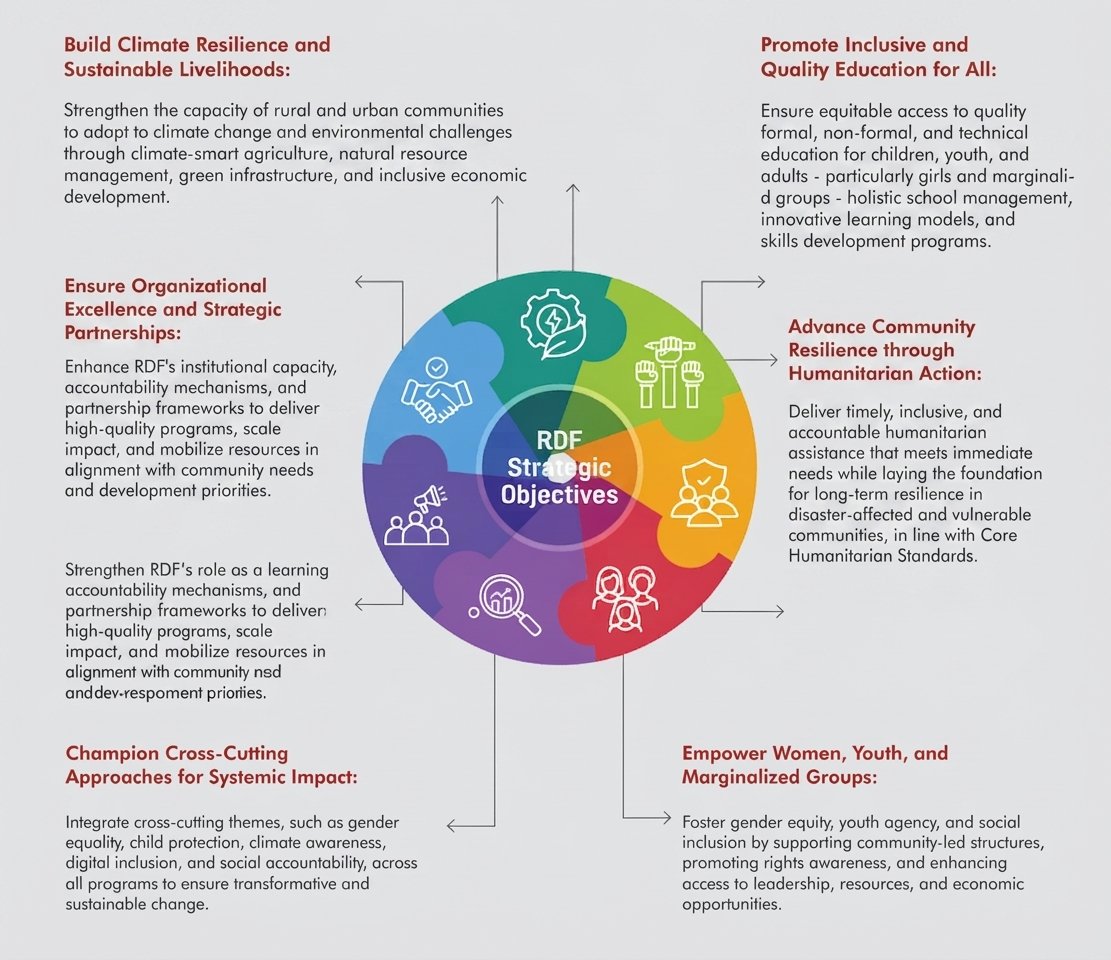
The strategic objectives of the RDF provide a focused roadmap for inclusive and sustainable development in Sindh. They aim to build climate resilience, ensure access to quality education, and deliver effective humanitarian responses. RDF emphasizes empowering women, youth, and marginalized groups, while integrating cross-cutting themes like gender equality and digital inclusion. Through innovation, policy engagement, and strong partnerships, RDF seeks to create lasting impact and align its efforts with community needs and priorities.
RDF’s core programmatic efforts are structured into key impact-driven programs:
Focuses on climate-smart agriculture, micro-enterprise development, water and land resource management, sustainable value chains (such as Better Cotton Initiative), and resilient food systems.
Expands access to quality education through formal school management (Public-Private Partnerships/EMO models with the Government of Sindh and SEF), non-formal education, and Technical and Vocational Education & Training (TVET).
Anchored in the Core Humanitarian Standards (CHS), delivering rapid life-saving assistance (WASH, heatstroke camps, multi-purpose cash) alongside long-term post-disaster shelter reconstruction and community resilience.
To ensure holistic, sustainable, and systemic change, RDF weaves the following cross-cutting approaches through every initiative:
Operational Footprint: Concentrated primarily across Sindh province through a network of field offices and targeted project interventions.
Active Districts: Karachi, Hyderabad, Thatta, Sujawal, Tando Muhammad Khan, Tando Allah Yar, Mirpurkhas, Umerkot, Sanghar, Shaheed Benazirabad, Shikarpur, and Jacobabad.
Target Communities: Focused on rural and urban poor, small-scale farmers, marginalized women, children, youth, and persons with disabilities.
Human Resources: There are 309 staff members currently serving at various levels of the organization. Out of them, 32% staff are female, and the remaining are male members. The staff qualification profile at RDF reflects a diverse and multidisciplinary workforce, with a strong representation of both academic and technical backgrounds. Notably, a significant number of staff possess advanced degrees such as MPhil, MS, MBA, and even PhD, demonstrating RDF’s commitment to professional excellence and specialized expertise across its programs. The most commonly held qualifications among the team include Master of Science (MSc), Master of Arts (MA), Bachelor of Science (BSc), Bachelor of Arts (BA), and below, indicating a balanced mix of higher education and foundational support roles. At the same time, the presence of diploma holders and staff with basic education highlights the inclusive hiring practices that ensure community-level representation and operational support. This broad qualification spectrum strengthens RDF’s capacity to implement community-centered development interventions with both strategic leadership and grassroots presence.
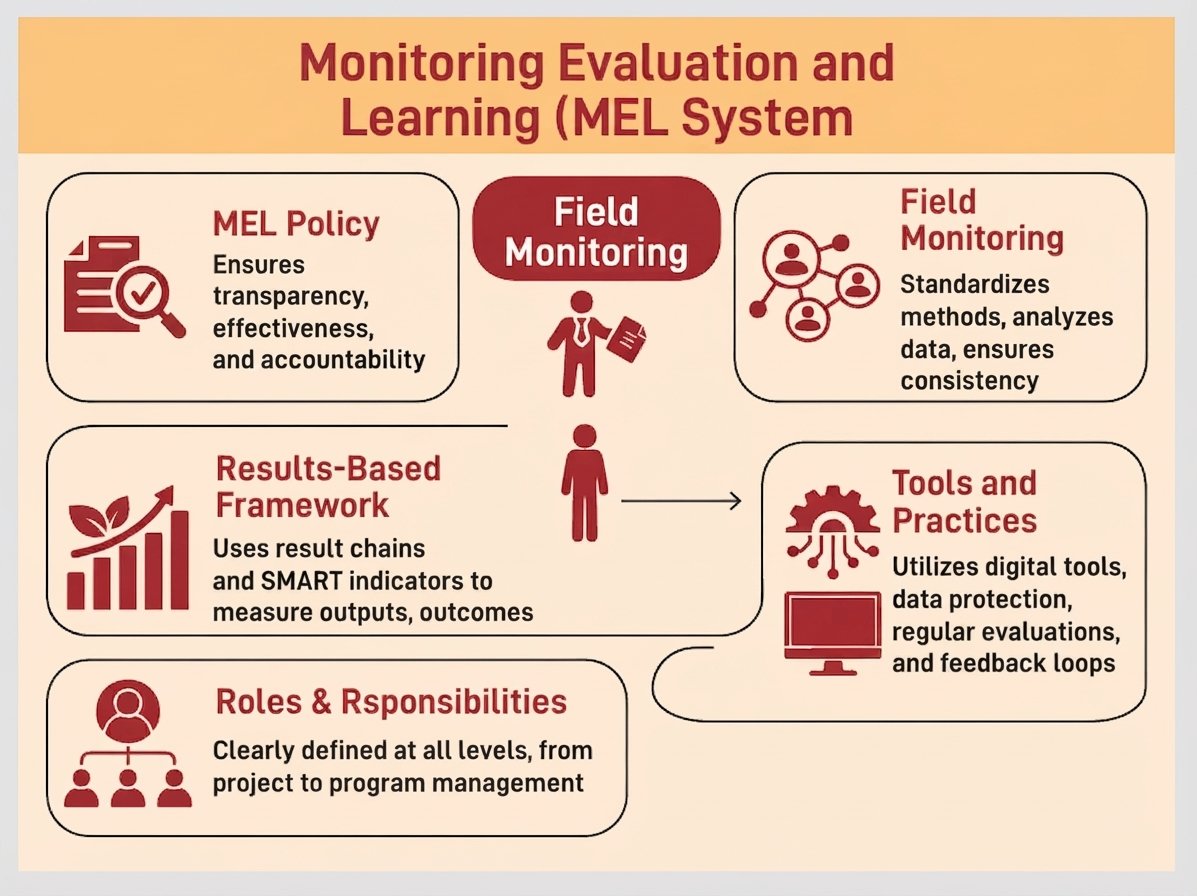
RDF has instituted a comprehensive Monitoring and Evaluation (M&E) policy to uphold the effectiveness, accountability, and continuous learning of its development programs. Rooted in the principles of transparency, utility, accuracy, feasibility, and ethical conduct, the policy guides how RDF tracks results, improves quality, enables learning, and informs strategic decisions across sectors like education, livelihoods, disaster response, and women’s empowerment. The M&E system is grounded in a results-based framework, using logical results chains, SMART indicators, and performance tracking to measure outputs, outcomes, and impacts. Field Monitoring Officers collect real-time data, while a centralized M&E Unit standardizes methodologies, analyzes results, and ensures data quality and consistency organization-wide. The policy clearly defines roles across all organizational levels, from project managers who lead design and evaluation, to program managers who integrate M&E into strategic decisions. RDF employs digital tools such as KoboToolbox and cloud-based MIS for timely and efficient data management, while ethical standards and data protection protocols safeguard participant privacy and promote responsible data use. Regular feedback loops, community engagement mechanisms, and periodic evaluations (baseline, midterm, final, and impact) reinforce a culture of adaptive management and evidence-based decision-making. By institutionalizing robust M&E processes, RDF ensures that its interventions are not only accountable and transparent but also continuously evolving to meet community needs more effectively.
The Finance Department of RDF operates under a set of Standard Operating Procedures (SOPs) designed to ensure accurate financial statement preparation and robust internal controls. The policy aims to define professional activities within the department, document financial processes, establish responsibilities and authority, and set timelines for financial reporting. This framework is vital for effective financial management, accountability, risk management, and long-term sustainability, serving as a critical reference for governance bodies, auditors, donors, and regulators. Key policies and procedures include mandatory authorization for all financial vouchers, a defined cheque signing matrix, and Board approval for advance payments and bank account operations. The policy also requires weekly data backups, adherence to tax regulations, and meticulous accounting record maintenance. A chart of accounts guides finance officers, and all accounting entries must be supported by documentary evidence and authorized signatures. Segregation of duties is strictly enforced to enhance internal controls and prevent any single individual from overseeing an entire transaction.
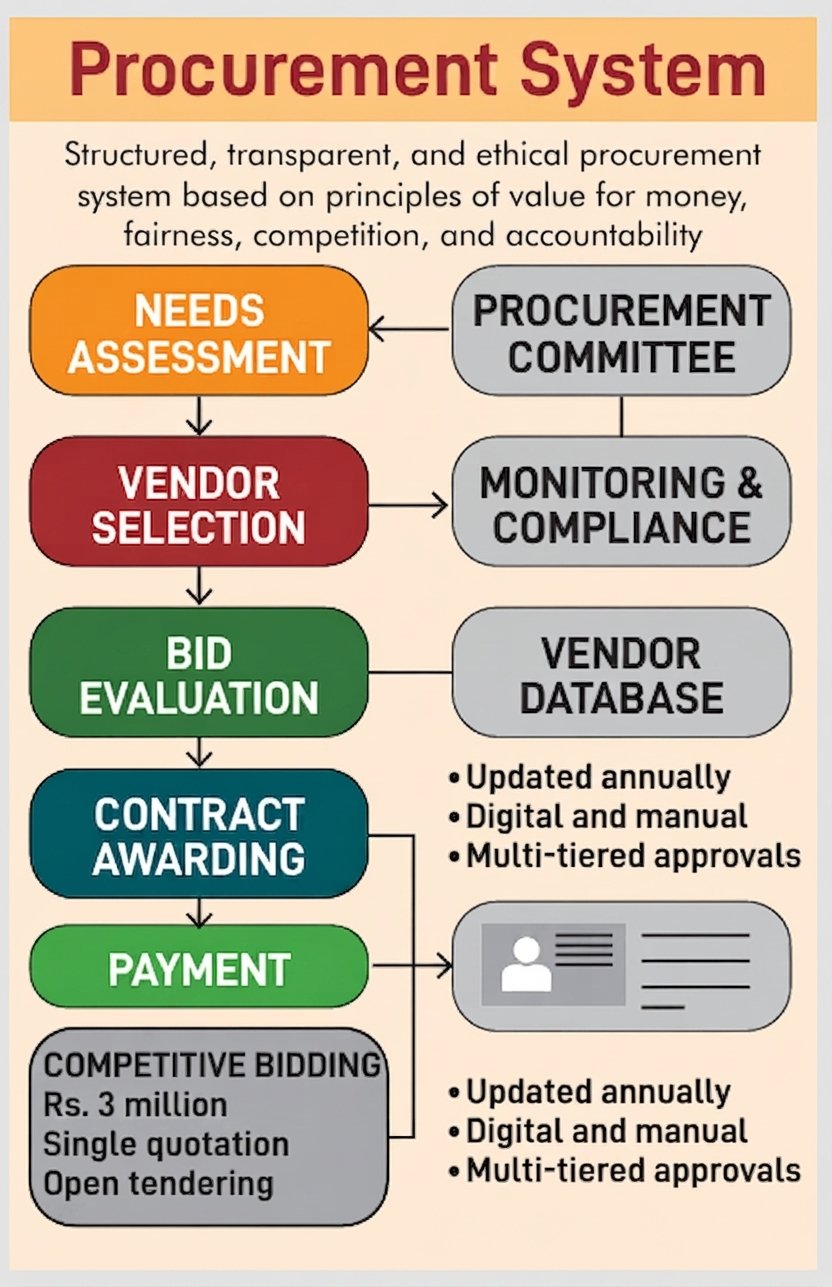
RDF follows a structured, transparent, and ethical procurement system grounded in the principles of value for money, fairness, competition, and accountability. All procurement activities, from the assessment of needs to vendor selection, bid evaluation, contract awarding, and payment, are governed by clear policies and monitored by a designated Procurement Committee. Competitive bidding thresholds are strictly followed, ranging from single quotations for low-value purchases to open tendering for procurements above Rs. 3 million. Vendor prequalification, conflict-of-interest declarations, and rigorous evaluation criteria ensure integrity and cost-effectiveness. RDF’s procurement policy emphasizes professionalism, zero tolerance for fraud and corruption, and high standards of confidentiality and ethical conduct. A centralized vendor database is maintained and updated annually, while digital and manual systems are used to track purchase orders, goods receipt, and invoice verification. Each procurement decision is backed by documented evidence and multi-tiered approvals, ensuring compliance, transparency, and responsible use of donor resources.
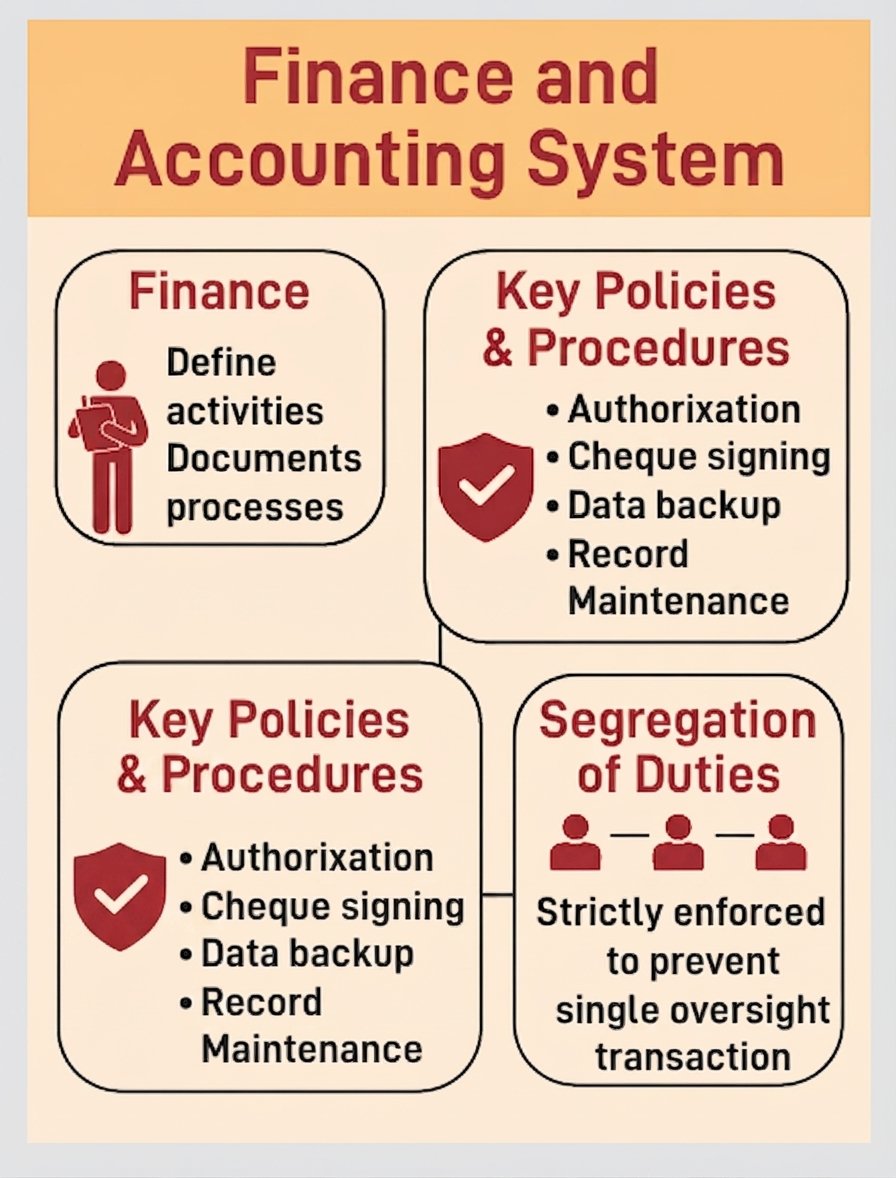
The Finance Department of RDF operates under a set of Standard Operating Procedures (SOPs) designed to ensure accurate financial statement preparation and robust internal controls. The policy aims to define professional activities within the department, document financial processes, establish responsibilities and authority, and set timelines for financial reporting. This framework is vital for effective financial management, accountability, risk management, and long-term sustainability, serving as a critical reference for governance bodies, auditors, donors, and regulators. Key policies and procedures include mandatory authorization for all financial vouchers, a defined cheque signing matrix, and Board approval for advance payments and bank account operations. The policy also requires weekly data backups, adherence to tax regulations, and meticulous accounting record maintenance. A chart of accounts guides finance officers, and all accounting entries must be supported by documentary evidence and authorized signatures. Segregation of duties is strictly enforced to enhance internal controls and prevent any single individual from overseeing an entire transaction.
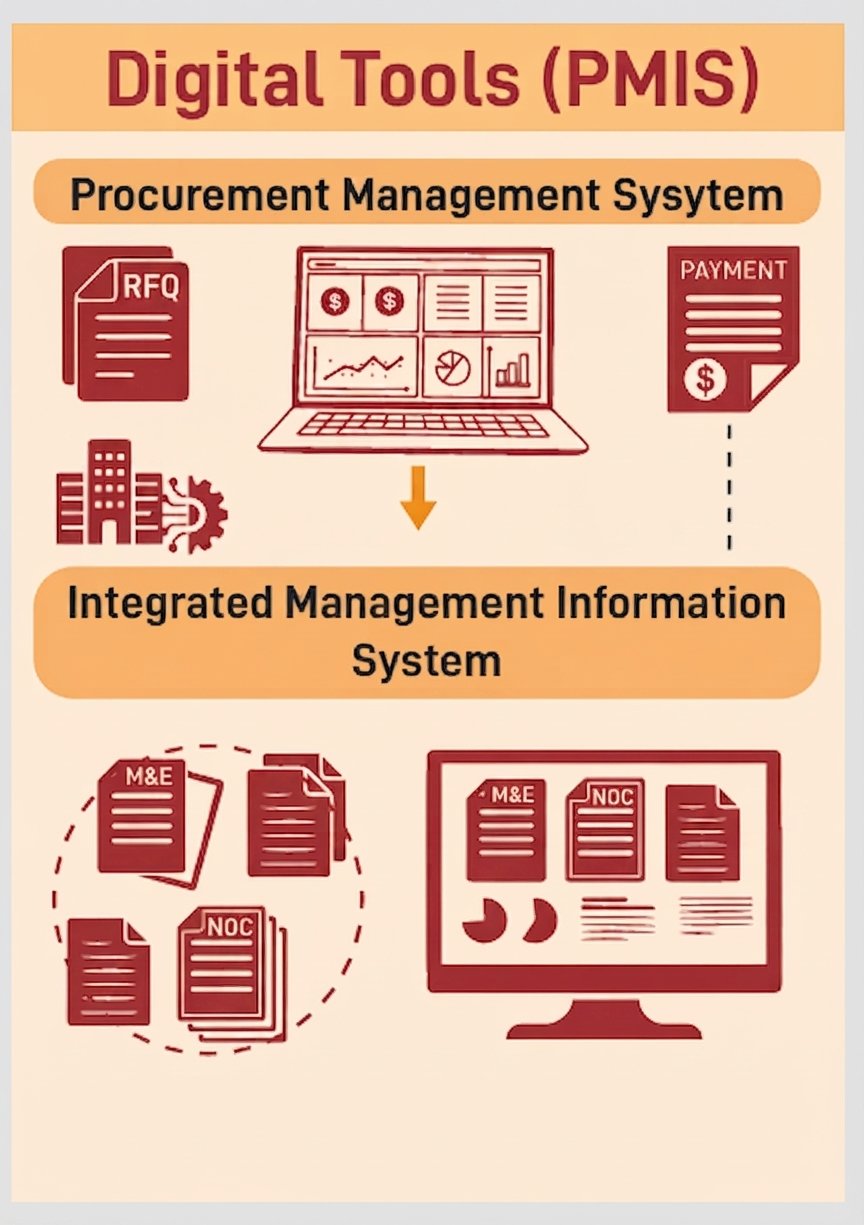
To enhance organizational performance and digital transformation, RDF has recently upgraded the PMS and initiated its integration with a centralized Management Information System (MIS). This MIS serves as a secure digital archive for critical documents such as project agreements, audit reports, M&E data, and government-issued NOCs. These developments significantly improve document traceability, accessibility, and knowledge management, reinforcing RDF’s commitment to effective project delivery, donor compliance, and strong institutional governance.
RDF upholds the highest standards of safeguarding to ensure the dignity, rights, and protection of all individuals, especially vulnerable community members and staff, against any form of abuse, exploitation, harassment, or misconduct. RDF’s Safeguarding Committee plays a central role in preventing and responding to safeguarding risks through strong policy implementation, awareness-raising, and survivor-centered response systems.
The Safeguarding Committee is chaired by the Manager of Monitoring and Evaluation and includes key representatives such as the Program Manager, Project Manager, HR Lead, and M&E Manager. The committee meets monthly, or as needed, to oversee safeguarding compliance and incident response. Its core responsibilities include enforcing RDF’s safeguarding and protection policies; ensuring accessible and confidential reporting channels; conducting regular training and sensitization for staff and communities; and coordinating with legal, medical, and protection agencies when necessary.
This mechanism also integrates oversight of the organization’s Code of Conduct, child protection, prevention of gender-based violence (GBV), whistleblowing protocols, and complaint response. RDF is committed to fostering a safe, inclusive, and respectful environment, both in the workplace and across all project locations, ensuring that any grievance is addressed fairly, promptly, and confidentially.
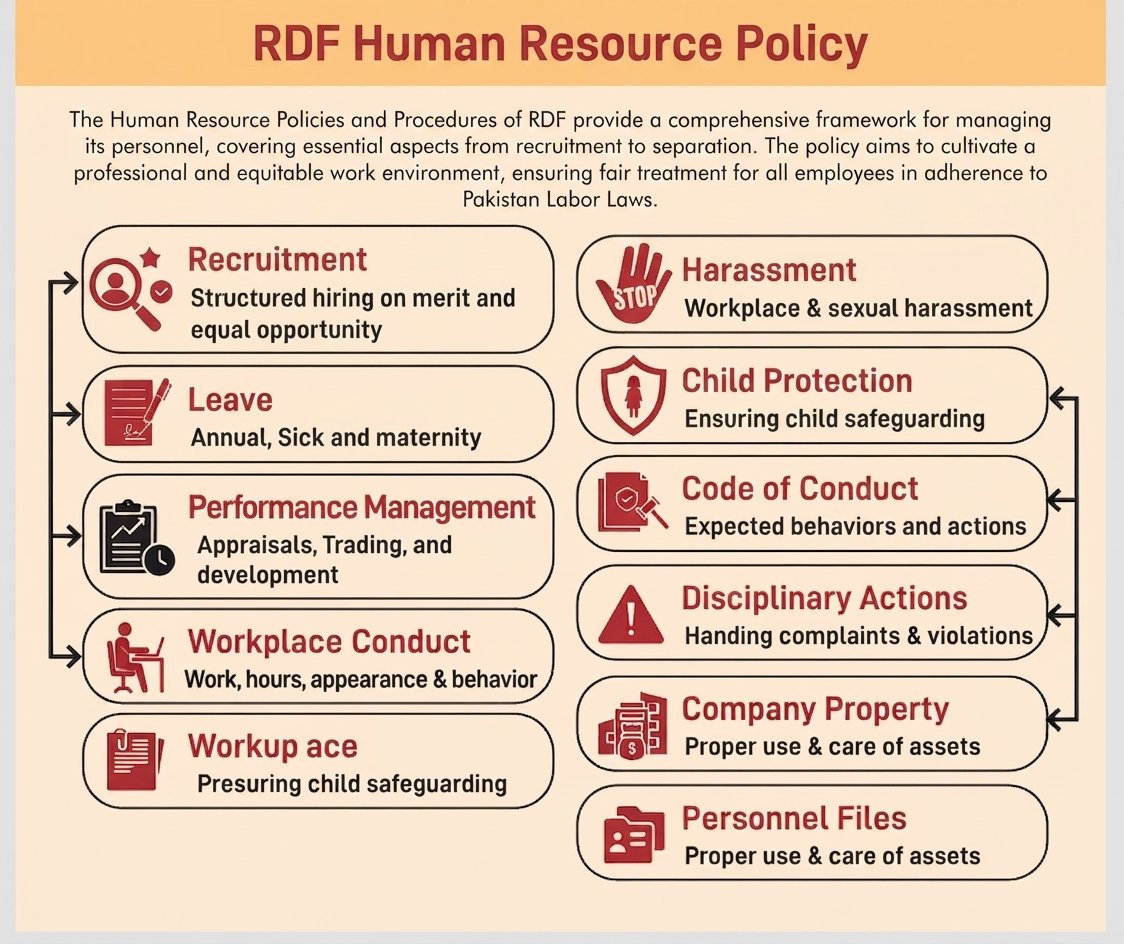
The Human Resource Policies and Procedures of RDF provide a comprehensive framework for managing its personnel, covering essential aspects from recruitment to separation. The policy aims to cultivate a professional and equitable work environment, ensuring fair treatment for all employees in adherence to Pakistan Labor Laws. It outlines structured processes for hiring based on merit and equal opportunity, compensation and benefits, various leave types (including annual, sick, and maternity), and performance management with provisions for appraisals, training, and development. Additionally, the policy addresses critical areas such as workplace conduct, including guidelines on work hours, appearance, and expected behavior, alongside stringent provisions against workplace and sexual harassment, child protection, and conflict of interest. It also sets forth a clear Code of Conduct outlining expected behaviors and unacceptable actions. Procedures for handling disciplinary actions, complaint resolution, use of company property, and maintaining personnel files are also detailed, ensuring comprehensive governance over employee relations and organizational resources.
RDF’s Child Protection Policy is an integral part of its Standard Operating Procedures (SOPs), designed to safeguard children’s rights and protect them from all forms of abuse and exploitation, including by staff or other representatives. It defines a child as any person under 18 years of age and aims to promote good practices while challenging abusive behaviors to create a safe environment for children. The policy is applicable across all RDF’s functional tiers, including HR, procurement, finance, administration, and program implementation, and mandates that no child under 18 will be recruited. It also emphasizes awareness-raising on child rights within communities and outlines a professional code of conduct, ensuring that any violation of child rights leads to disciplinary measures and legal action. RDF operates with cultural sensitivity, seeking mobilization approaches to resolve child protection issues in diverse communities while upholding national and provincial laws.
RDF’s Gender Mainstreaming Policy aims to ensure equal opportunities for men and women in development by addressing historical disadvantages and promoting fairness. It seeks to provide an equal platform for participation, support women’s human rights, and reduce gender disparities in access to resources and benefits. This policy integrates gender equality across all RDF initiatives, emphasizing that rights and opportunities should not be gender-dependent. RDF prioritizes women’s empowerment and offers equal opportunities in employment, training, and capacity building to all, including disabled and other social groups. The Board and Senior Management are responsible for policy adherence, with regular assessments to ensure compliance.
RDF is a proud member of the Core Humanitarian Standard (CHS) Alliance, and fully aligns its policies, systems, and practices with the Nine Commitments of the Core Humanitarian Standard on Quality and Accountability. RDF ensures that its programming is people-centered, responsive, and accountable, with mechanisms in place to ensure informed participation, safeguarding, complaints handling, and continuous learning. From needs assessments to monitoring and evaluation, RDF integrates CHS principles to uphold dignity, inclusion, and transparency across all phases of project delivery. Internal audits, regular staff training, and community feedback loops are used to assess and improve performance in line with international best practices.
RDF’s communication strategy is designed to enhance its impact through structured, transparent, and consistent communication, fostering engagement and amplifying its message to stakeholders. The strategy aims to strengthen internal and external communication, build a unified organizational voice, and ensure the timely dissemination of critical information. Key components include establishing standardized protocols for communication, integrating digital and traditional tools for efficiency, and improving messaging quality and consistency.
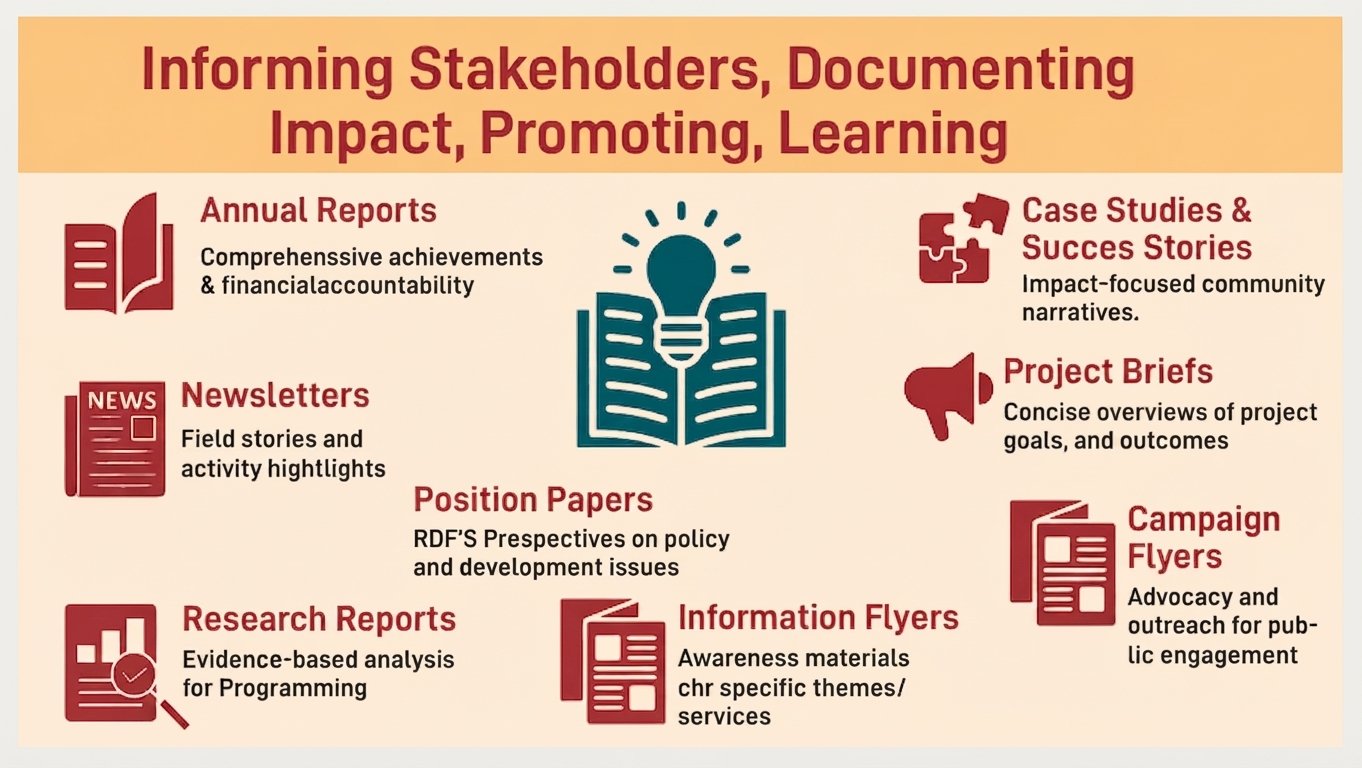
RDF regularly produces a diverse range of publications and knowledge products, available in both digital and print formats, to inform stakeholders, document impact, and promote learning. These include:
These publications reflect RDF’s commitment to transparency, knowledge sharing, and continuous learning across all areas of its work.
From 2022 to 2027, RDF has set a forward-looking strategic direction focused on building resilient communities, advancing inclusive development, and addressing the growing challenges of climate change. Rooted in its commitment to equity, sustainability, and empowerment, RDF’s strategy integrates cross-cutting themes such as climate resilience, gender justice, and institutional accountability across its core programmatic areas. These include climate-resilient livelihoods, inclusive education, resilient infrastructure, and institutional strengthening. By aligning with national priorities and global development frameworks, RDF aims to catalyze systemic change that not only improves lives today but also safeguards the well-being of future generations.
RDF will concentrate on boosting the productivity and incomes of small-scale producers while future-proofing rural economies against climate shocks. Priority actions include scaling climate-smart agriculture, water-use efficiency, soil and rangeland restoration, and drought-resilient cropping. The programme also opens non-farm employment pathways through value-chain development, micro-enterprise incubation, and green-job creation, especially for women and youth. Policy dialogue and market facilitation underpin the effort, ensuring producers gain fair access to land, finance, technology, and decent working conditions.
RDF is committed to expanding access to inclusive, equitable, and quality education while equipping individuals with relevant skills for employability and lifelong learning. This includes upgrading educational infrastructure, improving teaching and learning environments, promoting digital literacy, and creating opportunities for technical and vocational training. Special attention is given to girls, marginalized youth, and underserved communities to ensure no one is left behind. The focus is on enabling learners to thrive in a rapidly changing world while contributing to local development.
RDF prioritizes enhancing community resilience through sustainable agriculture, climate-adaptive housing, and improved water and energy systems. Interventions include promoting climate-smart farming, expanding water-use efficiency, supporting green jobs and enterprise development, and ensuring access to safe housing, clean water, and modern energy. These efforts aim to reduce vulnerability to climate shocks, combat environmental degradation, and strengthen household-level preparedness and adaptation capacities across rural Sindh.
To sustain impact, RDF will deepen social, economic, and political inclusion by empowering community-based organisations, self-help groups, and local authorities. Core actions include mainstreaming women’s leadership, strengthening complaint-response and safeguarding mechanisms, and promoting participatory planning and evidence-based decision-making. At the systems level, RDF will work with government and private-sector partners to improve rule-of-law frameworks, expand access to digital technologies, and mobilise public- and private-finance for poverty eradication and climate resilience. Together, these efforts create an enabling environment where communities can thrive, learn, and adapt in a changing climate.