Building strong alliances for sustainable development and community resilience across Pakistan.
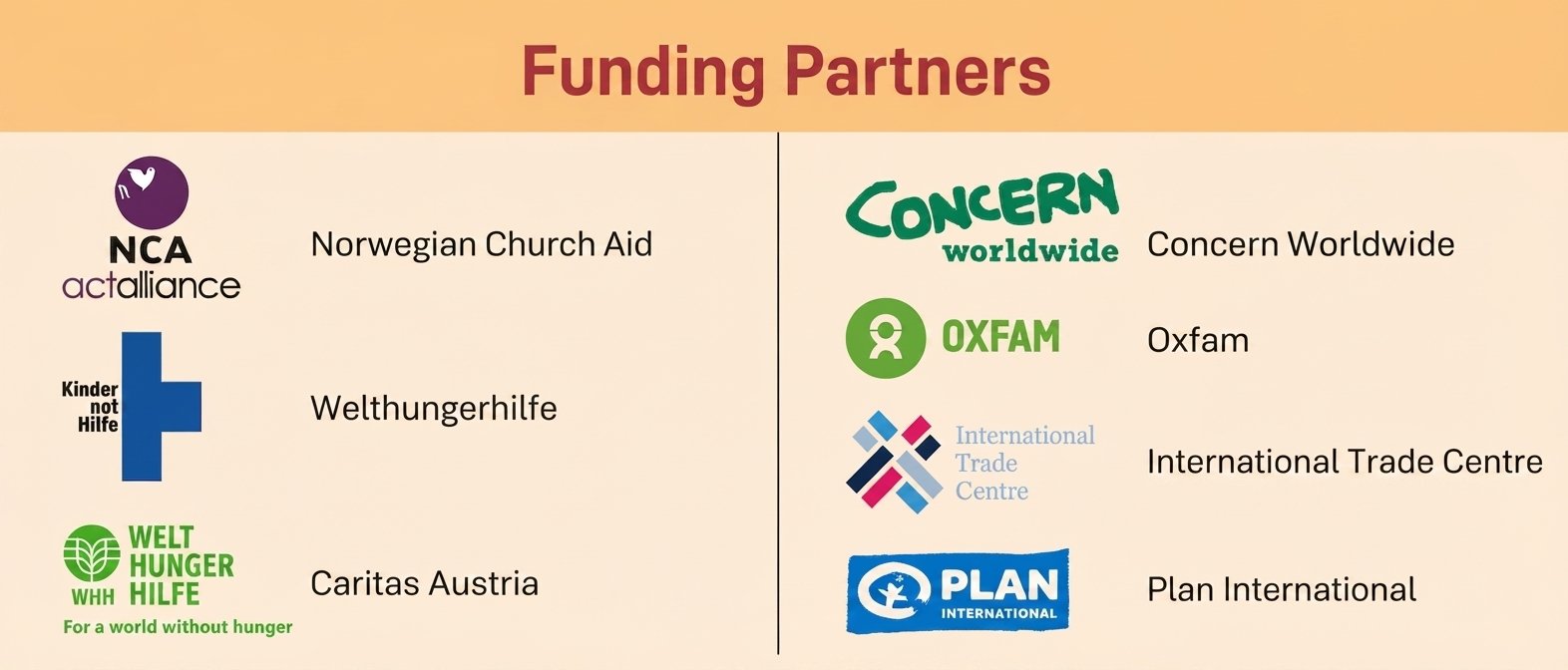
Over the years, the Research and Development Foundation (RDF) has cultivated strong, enduring partnerships with a diverse range of national and international donors committed to sustainable development and humanitarian action in Pakistan. Key international development agencies such as Norwegian Church Aid (NCA), Kindernothilfe (KNH), Welthungerhilfe (WHH), Caritas Austria, Concern Worldwide, Oxfam, International Trade Centre (ITC), and Plan International have been instrumental in supporting RDF’s work across sectors such as WASH, education, disaster risk reduction, livelihoods, child protection, and climate resilience. These collaborations have allowed RDF to scale up its interventions, particularly in the wake of recurring climate disasters in Sindh.
On the national front, RDF has partnered with Pakistan Poverty Alleviation Fund (PPAF) institutional donors including the Public-Private Partnership Node of the Sindh Education and Literacy Department, Sindh Education Foundation (SEF), and various arms of the Government of Sindh, particularly in managing public schools and implementing behavior change and capacity-building programs. In recent years, RDF has also received support from multilateral actors such as the United Nations Development Programme (UNDP) and sector-specific technical organizations like MetaMeta and Trocaire. RDF has also tapped Corporate Social Responsibility (CSR) funding by partnering with Eni-Pakistan and United Energy Pakistan for community development initiatives.
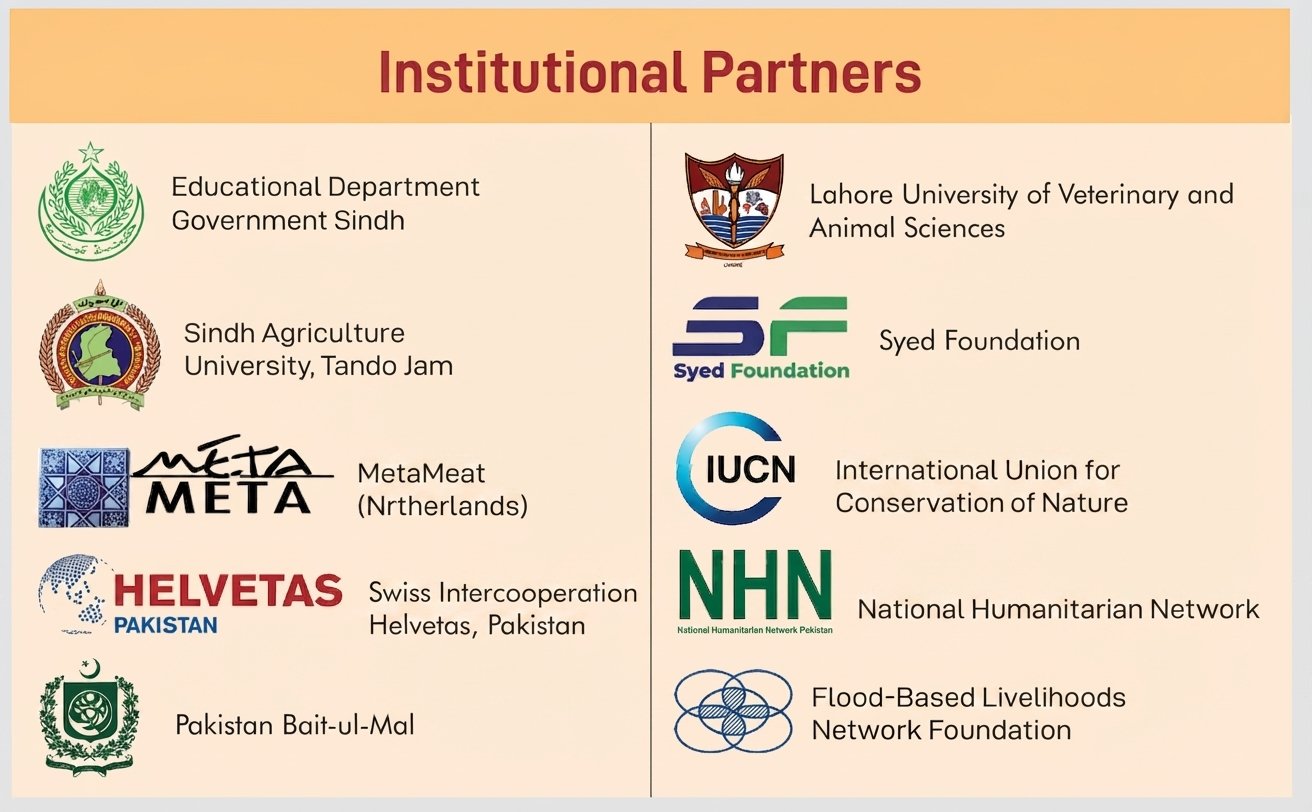
RDF has actively pursued strategic collaborations with academic, governmental, and international institutions to enhance the technical depth, outreach, and impact of its programs. Through formal Memoranda of Understanding (MoUs), RDF has partnered with the Education Department, Government of Sindh, to strengthen public sector education delivery. In the agricultural and environmental sectors, RDF collaborates with leading academic bodies such as Sindh Agriculture University, Tando Jam, and the Food Science Department at the University of Sindh, focusing on sustainable agriculture and food security. To address water resource management and climate resilience, RDF has drawn technical expertise from MetaMeta (Netherlands) and Swiss Intercooperation Helvetas, Pakistan NGO specializing in community-based adaptation models.
At the national level, RDF has partnered with Pakistan Bait-ul-Mal, Lahore University of Veterinary and Animal Sciences, and Syed Foundation to support poverty alleviation, livestock health, and community financing mechanisms, respectively. These partnerships allow RDF to integrate cross-sectoral knowledge and evidence-based practices into its development programming, ensuring sustainable outcomes for the communities it serves.
In addition to institutional collaborations, RDF is an active member of several key national and international networks. These include the International Union for Conservation of Nature (IUCN), National Humanitarian Network (NHN), Human Resource Development Network (HRDN), and the Flood-Based Livelihood Network, enabling RDF to engage in policy dialogue, knowledge exchange, and coordinated response mechanisms at multiple levels. Together, these partnerships and memberships reflect RDF’s commitment to innovation, collaboration, and collective impact in the development landscape.