Overview of RDF's legal framework, registration, governing bodies, and organizational structure.
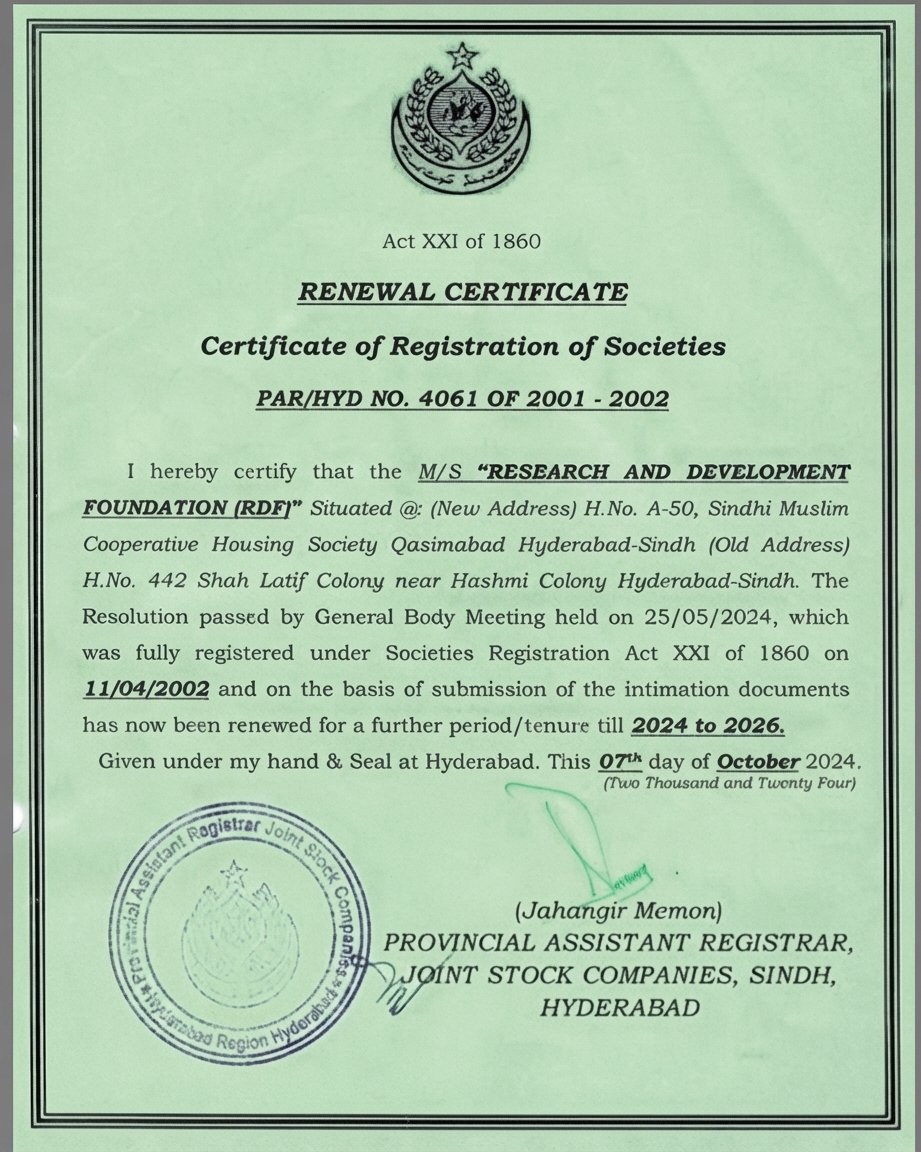
RDF is legally registered under the Societies Registration Act, 1860, since 2002, under registration number PAR/HYD No.4061 of 2001–2002. RDF is a certified Not-for-Profit Organization (NPO), accredited by the Pakistan Centre for Philanthropy (PCP). Additionally, RDF holds a valid Memorandum of Understanding (MoU) with the Economic Affairs Division (EAD), Government of Pakistan, enabling it to collaborate with international development partners.
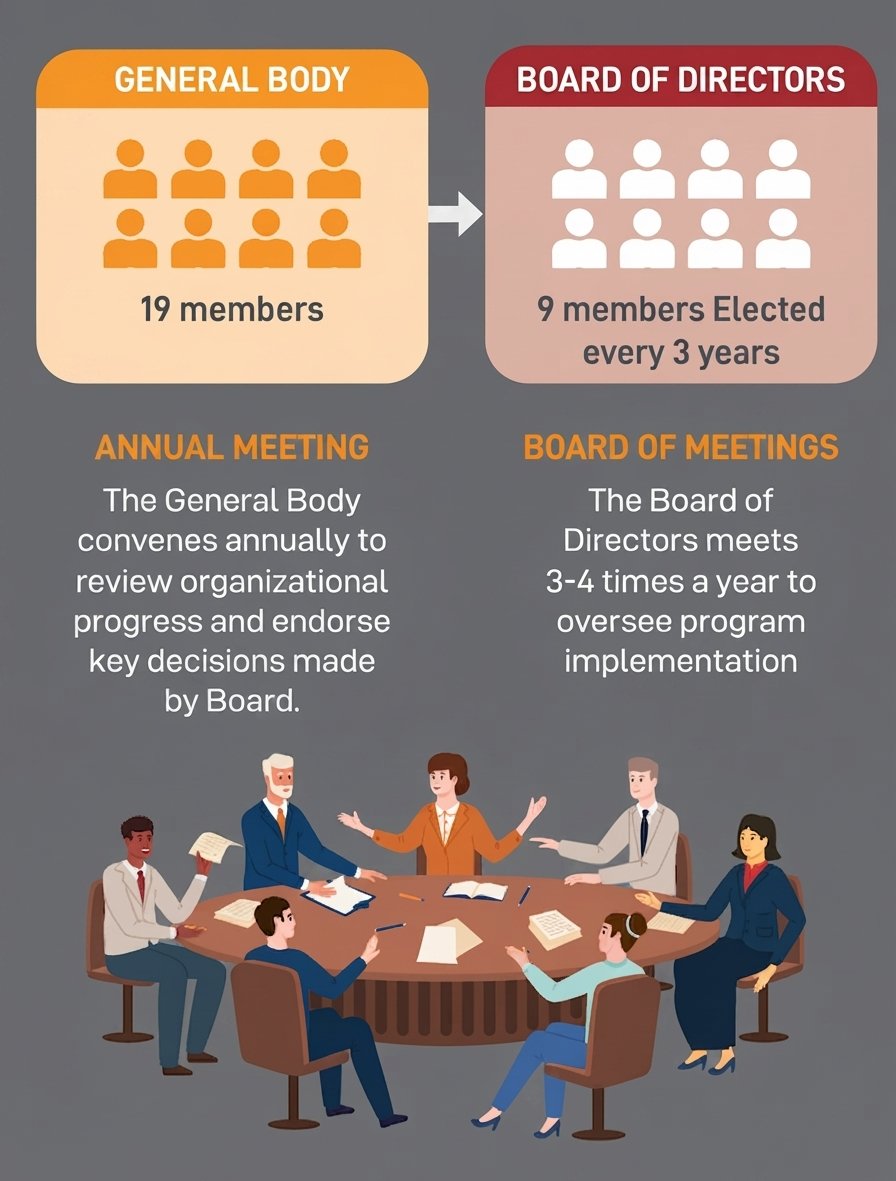
RDF is governed by a 19-member General Body, which serves as the organization’s highest decision-making forum. From within this body, 9 members are elected every three years to form the Board of Directors, responsible for providing strategic leadership, organizational oversight, and policy guidance.
The Board comprises professionals from diverse backgrounds, including community development experts, technocrats, and subject matter specialists. The General Body convenes annually to review organizational progress and endorse key decisions made by the Board. The Board of Directors meets 3-4 times a year to oversee program implementation, ensure compliance with policies, and approve the initiation of new projects.
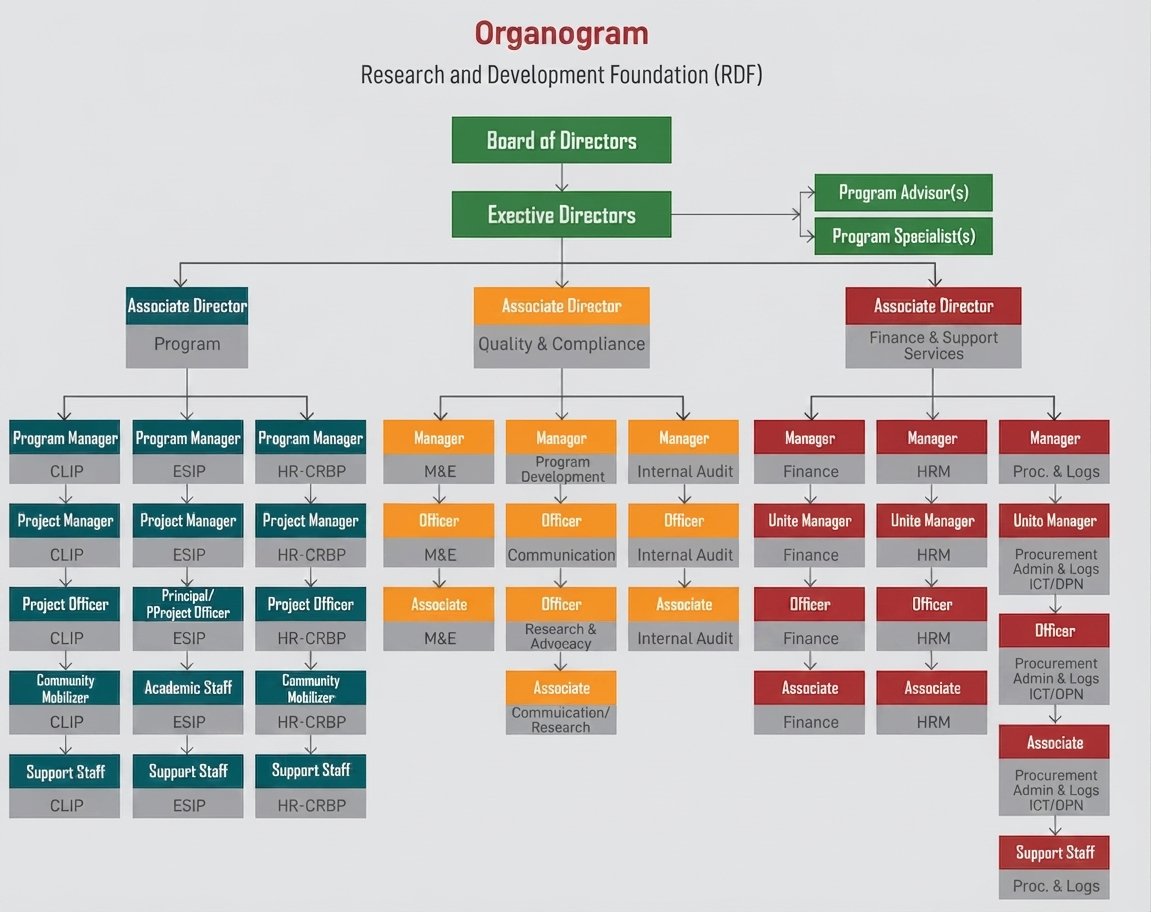
The Executive Director (ED) serves as the chief executive of RDF, providing overall leadership and operational oversight. The ED is supported by a Management Committee, comprising heads of core departments including Programs, Quality & Compliance, Finance, Administration, and Procurement.
Below this leadership level, departmental heads are supported by Project Managers, Unit Leads, and Team Leaders, who are responsible for the day-to-day management and coordination of programmatic and operational functions.
At the field and support level, a dedicated team of Community Mobilizers, Finance and Admin Officers, and Procurement Assistants ensure smooth implementation of activities. The final tier includes support staff such as drivers, office assistants, and facility personnel, who contribute to the daily functioning of the organization.
|
CLIP: Climate and Livelihood Improvement Program Comms: Communication DPN: Digital Platforms and Networking |
ESIP: Education and Skills Improvement Program HR-CRBP: Humanitarian Response and Community Resilience Program HRM: Human Resource Management |
ICT: Information and Communication Technology M&E: Monitoring and Evaluation Proc. & Logs: Procurement and Logistic |